As a broad starting point, asphalt shingle roofs are often planned around 20–30 years and metal roofs around 40–70 years. Those ranges are not a forecast for an individual Utah roof. The product, installation, weather exposure, maintenance, and condition of the complete assembly determine whether a repair or replacement deserves consideration.
Typical roofing lifespans are planning ranges, not promises
Architectural asphalt shingles are often planned around a multi-decade service life, while premium metal and tile systems are commonly selected with a much longer horizon in mind. Actual performance depends on the product, exposure, ventilation, maintenance, workmanship, and whether flashing and penetrations were detailed correctly.
| Roof type | Planning horizon | What most affects it in Utah |
|---|---|---|
| Architectural asphalt shingles | Often roughly 20–30 years | UV exposure, ventilation, wind, hail, granule loss, and installation quality |
| Standing-seam metal | Often 40–70 years or more | Finish, panel and seam detailing, penetrations, snow management, and corrosion control |
| Stone-coated steel | Often 40–70 years or more | Product profile, coating condition, fastening, flashings, ventilation, and installer precision |
| Tile or specialty systems | Often multiple decades | Material type, structural support, underlayment, breakage, flashing, and maintenance |
These ranges are useful for early planning, but they are not a substitute for product-specific documents or an inspection. A young roof can fail early when the assembly is wrong, and a well-built older roof may still have responsible service life left. For manufacturer context, GAF’s homeowner FAQs discuss asphalt lifespan and the factors that affect it; DECRA’s homeowner questions discuss metal roofing lifespan. Confirm the guidance for the exact product rather than treating a general range as a warranty.
How Utah weather shortens roof life
Sun and elevation
Strong UV exposure ages asphalt surfaces and finishes over time. Granule loss, fading, brittleness, and sealant deterioration may become visible gradually rather than after a single event.
Snow and ice
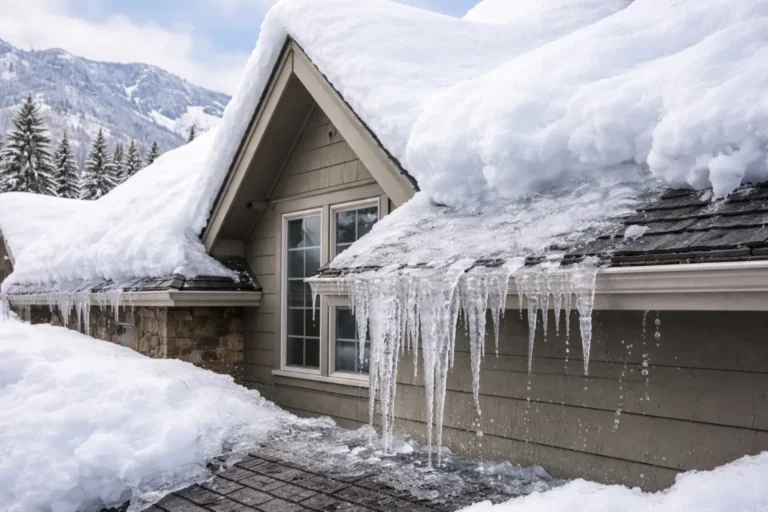
Snow adds weight and moves water through repeated melting and refreezing. Poor ventilation and insulation can create uneven roof temperatures that contribute to ice at the eaves. Metal systems also require thoughtful planning for where snow may release.
Wind and fast temperature swings
Canyon and valley winds test edges, flashings, and attachments. Rapid temperature changes make materials expand and contract, which puts repeated stress on seams, fasteners, and sealants.
How long do metal roofs last in Utah?
A properly selected and installed premium metal roof is usually a long-horizon system. Standing seam and stone-coated steel can both serve for multiple decades, but profile choice does not erase the need for good deck preparation, underlayment, ventilation, flashing, trim, and snow planning.
Compare the two systems in Standing Seam vs. Stone-Coated Steel Roofing for Utah Homes, or explore DECRA stone-coated steel profiles.
Signs a roof deserves a closer look
Record what you can observe safely from indoors or the ground, and discuss the following conditions with a qualified inspector. Leave roof access, attic areas without safe access, and checks of decking or attachments to the professional.
- Recurring leaks or repairs in more than one area
- Curling, cracking, missing shingles, or heavy granule loss
- Loose flashings, open seams, failed sealants, or exposed fasteners
- Soft decking, attic staining, daylight, or signs of trapped moisture
- Visible movement at ridges, edges, penetrations, or roof-to-wall transitions
- A roof nearing its expected range with no clear installation or warranty records
A practical roof maintenance plan for Utah homeowners
The National Roofing Contractors Association’s residential maintenance guidance recommends inspections at least twice a year, preferably in spring and fall, with additional inspections after severe weather. Ask your roofer how the product instructions, roof history, and access conditions should shape your own maintenance plan.
- Keep a roof history. Save the installation date, product names, inspection reports, repair invoices, and written warranty terms.
- Record changes safely. Note new ceiling stains, missing-looking materials, displaced flashing, or visible gutter overflow from an appropriate indoor or ground-level position.
- Arrange safe drainage maintenance. Discuss debris, outlets, and downspouts with the contractor. Confirm who handles work requiring a ladder or roof access.
- Report a leak when it appears. Record its timing and location rather than waiting for the next routine inspection. Confirm current availability for an assessment.
- Track the agreed follow-up. Keep the repair scope, completed-work record, and any remaining inspection or maintenance tasks together.
Our roof inspection checklist helps you ask what was examined and what remained inaccessible. If a particular concern needs work, compare the findings with our roof repair service before assuming that the covering must be replaced.
Roof age, repair, and warranty questions
Should a 20-year-old roof be replaced automatically?
No. Age is useful history, but it does not establish the condition of the roof. Ask the inspector to explain the covering, flashing, surrounding assembly, leak history, and practical repair options. Our repair-versus-replacement guide explains the decision.
Does a long warranty tell me how many years are left?
No. A warranty describes coverage and conditions; it does not measure the remaining life of your installed roof. Review the actual product and workmanship documents, including exclusions, maintenance duties, registration, and transfer requirements. Use our roofing warranty questions to prepare that discussion.
Can a repair extend the use of an older roof?
A focused repair may be practical when the affected detail and surrounding roof remain serviceable. Recurring leaks or deterioration in several areas may justify a broader plan. Ask what the proposed repair addresses, what it cannot address, and how any follow-up will be handled.
Plan before the roof makes the decision for you
An inspection gives you time to choose materials, compare complete scopes, and coordinate the roof with siding, gutters, existing or planned solar panels, or other exterior plans. PowerHouse will tell you when a focused repair is sensible and when replacement is the better long-term decision.
Product note: DECRA profile descriptions and published performance information are based on current manufacturer materials. Product availability, colors, installation requirements, ratings, and warranty terms should be confirmed for the exact system selected for your home. Review DECRA product information.
Plan your next step
If replacement is approaching, consider architectural shingles versus metal roofing alongside the home’s attic ventilation and roof assembly. The installation details matter as much as the covering.