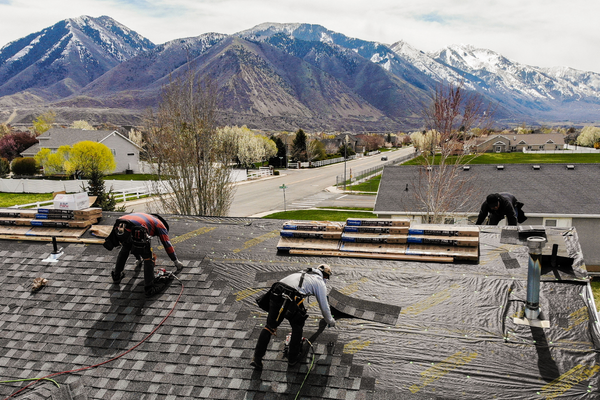
After a windstorm in Lehi, Draper, or elsewhere along the Wasatch Front, a few shingles in the yard can raise a difficult question: does the roof need a repair, or is replacement the next step? Start with documented findings. The roof’s age, a nearby weather report, or a single photograph cannot answer that question on its own.
Start with safe observations after the storm
Wait until conditions are safe before looking around the property. The National Weather Service’s wind safety guidance explains that strong winds can occur with storms or mountain weather and can send objects flying. Leave roof access and close inspection to a qualified professional.
From the ground, note missing or displaced shingles, debris, and changes along the roof edge. Indoors, record new stains or dripping and when you first noticed them. Take photographs from a safe position and keep earlier roof photos or repair records if you have them. GAF’s storm-damage resource recommends documenting visible effects and getting a professional assessment. Your observations give the assessor a starting point; they do not establish the cause or full extent of damage.
What wind can do to asphalt shingles
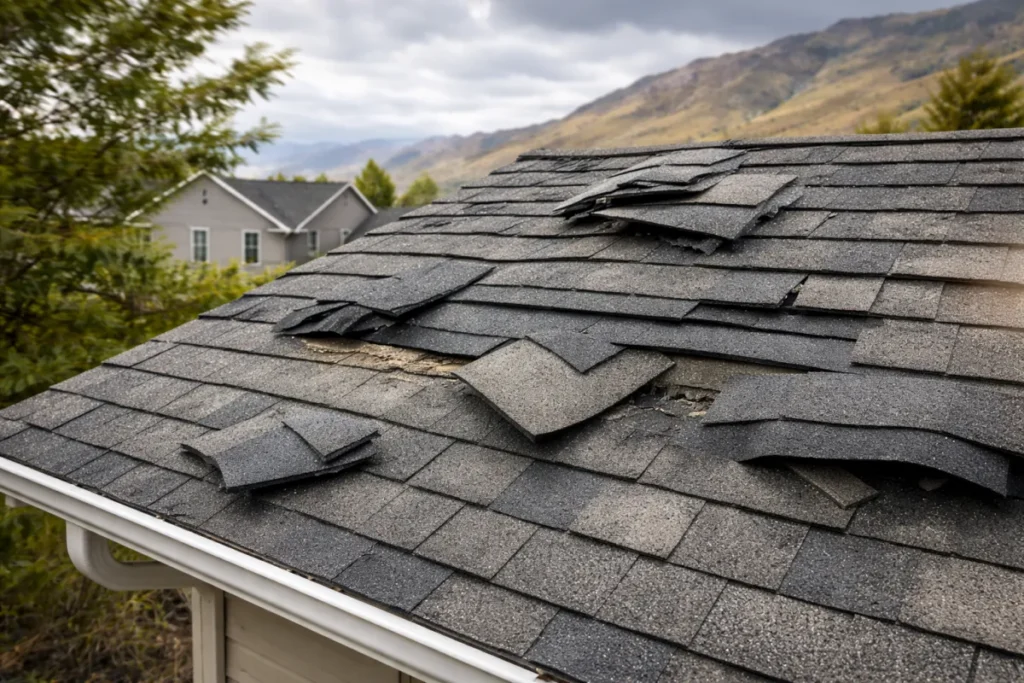
Wind can disturb more than the shingles that end up on the lawn. GAF’s technical bulletin on wind damage to shingles describes broken sealant bonds, lifted or creased shingles, and damage from windborne debris. Ask the roofer to identify the actual conditions and photograph the affected locations.
A loose seal does not call for the same repair as a torn or punctured shingle. For its shingles with wind-broken bonds and no other damage, GAF describes hand-sealing as a repair approach. That is manufacturer-specific guidance for a contractor to evaluate, rather than a reason to assume every lifted shingle needs the same treatment. Ask which product instructions apply to your roof and whether the surrounding material can be worked on without further damage.
How long can a wind-damaged roof last?
There is no dependable countdown based on roof age or a general label such as “minor wind damage.” Before discussing remaining service life, have the affected area, the condition of the surrounding roof, previous repairs, and any signs of water entry evaluated. Ask what is known, what remains concealed, and what follow-up is recommended.
An older roof does not automatically require replacement, and a newer roof should not be assumed sound after a storm. Our guide to roof service life in Utah explains how condition and the actual roof assembly fit into planning. Use installation records and product documents when available, alongside the current inspection findings.
Compare a targeted repair with a wider scope
Ask the contractor to show where the observed damage starts and ends. If a repair is proposed, the written scope should identify the area, materials, related flashing work, and how the repair will meet the existing roof. Discuss any limitations in matching the appearance or working with the surrounding shingles.
If replacement is proposed, ask why a smaller repair would leave the concern unresolved. Request photographs and an explanation of how the recommendation relates to the roof’s overall condition. For concealed conditions, agree on how additional findings will be documented and changes approved. Our roof decking guide helps you discuss what happens if damaged sheathing is found after materials are removed.
Prepare for an inspection in Lehi or Draper
When requesting an appointment, explain when the storm occurred, what changed afterward, and whether water is currently entering the home. Share the roof’s approximate installation date if known, earlier repairs, and any access concerns. Our roof inspection checklist covers useful information to have ready and questions to ask about areas the assessor cannot see.
Keep a copy of the findings and compare proposals by the included work. Materials, removal, flashing, cleanup, and the process for additional work should be clear. Use the roof estimate checklist to organize those questions rather than comparing only the final price.
Take the next step based on your roof’s condition
PowerHouse Roofing provides roof repair services in Utah County and across the Wasatch Front. If your Lehi or Draper home has a roof concern after wind, request a roof assessment. Describe any active leak when you contact the team so inspection availability and the next step can be discussed.