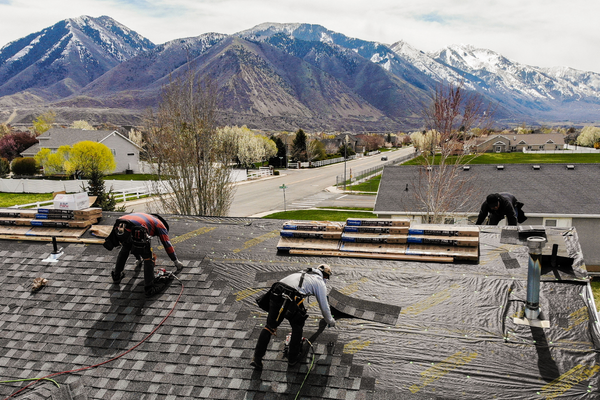
Before comparing two reroofing prices, confirm whether both proposals remove the existing roof. A roof overlay adds a covering over an existing one. A tear-off replacement removes the old covering before the new roof is installed. Those approaches leave different work visible, accessible, and included in the price.
For a homeowner in Provo, Orem, or another Utah community, the useful question is which scope fits the actual roof and proposed product. This guide focuses on asphalt-shingle reroofing. A shingle-over-shingle example does not establish what is suitable for a metal, tile, or low-slope roof.
Make the wording in the proposal specific
The Asphalt Roofing Manufacturers Association distinguishes roof replacement from roof recover in its replacement-versus-recover bulletin. Reroofing can describe either approach. Ask the contractor to write out which existing layers will remain and which will be removed, instead of relying on the word “reroof” alone.
- Overlay or recover: the proposed covering goes over existing roofing. Identify the existing covering and the new product in the scope.
- Tear-off replacement: the old covering is removed. Identify the removal, disposal, deck assessment, repairs, and new assembly included.
- A mixed scope: if different roof sections receive different work, label those sections so the total is understandable.
An overlay needs a property-specific assessment
An additional layer is not automatically suitable because it avoids removal work. The existing layers, surface condition, supporting structure, deck condition, and the selected product all belong in the assessment. ARMA recommends checking the applicable local requirements and the manufacturer’s specific recommendations.
GAF’s guidance on new shingles over old shingles discusses the importance of a suitable existing surface and warns that covering a roof with extensive leakage may leave hidden problems untreated. Ask how the contractor reached the recommendation for your home and what could not be examined. Our roof inspection checklist helps you organize that conversation.
Request the current installation instructions for the exact proposed product. A general statement that an extra layer is allowed does not identify whether that product, existing covering, and roof assembly are an appropriate combination.
Understand what tear-off makes accessible
Removing the old covering creates an opportunity to examine the exposed deck and address findings before the new covering goes on. It does not mean that every roof needs all-new decking. Ask how the team will distinguish suitable existing material from areas needing repair or a different preparation.
Our roof decking replacement guide explains photographs, repair boundaries, allowances, and approval of added work. If a proposal keeps existing layers, ask what the assessment can establish about the concealed materials and how an unresolved concern affects the recommendation.
Compare the work around the covering
Two quotes can name the same shingle and still describe different projects. Review the adjoining details rather than assuming the new visible surface answers every question.
- Which existing layers and roof areas are included in removal or preparation?
- Which underlayment, water-protection details, flashings, and roof-edge components are included, and which remain?
- How will chimneys, skylights, plumbing vents, valleys, and roof-to-wall transitions be handled?
- What ventilation assessment or changes are included?
- How are gutters, landscaping, access areas, delivery, debris, and cleanup accounted for?
Keep those answers beside the roof replacement estimate checklist. Ask for written clarification when one quote includes an item and another leaves its treatment unclear.
Confirm requirements for your property address
For example, Salt Lake City’s reroofing questionnaire asks whether existing materials will be removed and, if retained, how many layers are present. Confirm the current requirements with the building department serving your address. A general online layer limit is not an approval for your property or project.
Before choosing the work, establish who will arrange any required permit and inspections and which supporting information is needed. If the proposed material or retained layers raise a structural question, clarify who will assess it and how the result becomes part of the scope.
Review the price, changes, and written coverage together
If removal or disposal is excluded, the starting price is for a different commitment. Ask each contractor to separate the known work from allowances and exclusions. Confirm how a concealed finding would be documented and priced, who approves additional work, and how the exposed area will be managed while a decision is pending.
Also request the product warranty documents and the contractor’s workmanship terms for the actual proposed installation. Use our roofing warranty questions to discuss eligibility, exclusions, and responsibilities. Avoid assuming that the same product name makes coverage identical between different installation scopes.
Choose a scope you can explain back
Before approving a reroofing proposal, you should be able to describe what comes off, what stays, what will be assessed, and what happens if the findings change the work. Keep that explanation with the product selection and written price.
PowerHouse Roofing helps Utah homeowners review the existing roof and plan residential roof replacement. Arrange a free inspection and bring any prior repair records or competing proposals so the team can discuss the condition, options, and scope for your home.