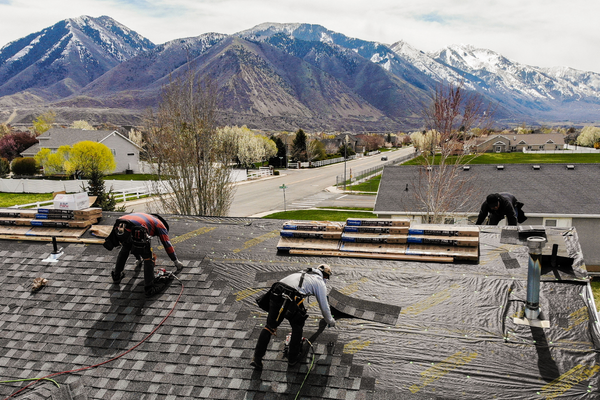
A new roof does not automatically require all-new decking. The existing deck needs to be assessed, and the proposal should explain how unsuitable areas will be handled. Some findings may only become clear after the old covering is removed. Before installation day, agree on how the crew will document those findings, price additional work, and obtain your approval.
For a homeowner planning roof replacement in Provo, Orem, or another Utah County community, that conversation can prevent confusion when the roof is open. You should be able to connect any added work to a location, a condition, and a written decision.
What is roof decking?
Roof decking, also called sheathing, is the surface supported by the roof framing beneath the protective layers and covering. Plywood, oriented strand board (OSB), and wood boards are among the materials you may hear discussed. GAF’s roof decking overview explains its role in the roof assembly.
Decking is different from the underlayment above it and the rafters or trusses supporting it. If the crew says “wood repair,” ask which of those components is involved. Replacing a section of sheathing and addressing damaged framing are different scopes of work.
Why the full condition may be hidden until tear-off
If a proposal leaves the old roofing in place, clarify what can be assessed beneath it. Our overlay-versus-tear-off guide explains the difference between retaining a covering and removing it as part of the replacement scope.
An initial roof assessment has limits. The covering hides the top of the deck, and attic access may be restricted. Removing the old layers can reveal deterioration or other conditions that were not visible beforehand. A useful inspection records what was examined and what remained concealed.
When a concern is found, request an overview photograph identifying the roof area and closer photographs showing the condition. Ask what the assessment found about the material’s suitability for the planned roof system. A photograph helps document a finding; the contractor still needs to explain the recommendation.
Separate damaged material from a change to the planned assembly
A deck repair might address a limited damaged area. A broader proposal might concern the existing deck’s suitability for the selected covering. Those explanations should be clear before you compare the amount of work. Ask whether the recommendation addresses deterioration, the existing construction, or both.
Product selection and installation details matter. APA – The Engineered Wood Association explains that wood sheathing panels change size as moisture conditions change. Have the contractor identify the proposed panel product and the installation requirements that apply to your roof. A general internet thickness or fastening rule is not a specification for your home.
If the concern extends to rafters, trusses, or another structural component, ask who will assess it and what additional design, inspection, or specialist involvement is needed. Make sure a proposal for decking does not leave the supporting structure’s condition unexplained.
Make the decking allowance understandable before work starts
Read the allowance alongside the full roof replacement estimate. A price described as “per sheet” is incomplete unless the agreement also identifies the material and the work included in that rate. Ask for these details in writing:
- The material, size, and specification used to measure a unit of replacement.
- Any quantity already included in the base price and how unused allowances are handled.
- Whether the rate includes removal, disposal, installation labor, fasteners, and associated work.
- How partial sheets, separate roof areas, or a different panel requirement will be measured and priced.
- Who approves additional quantities and when the updated total will be provided.
If one proposal includes an allowance and another excludes all deck work, their starting totals describe different commitments. Compare the terms as well as the total. Request a project-specific price rather than relying on a generic Utah average.
When the crew calls: review the change in a clear order
- Locate it: identify the slope or roof section and review the photographs.
- Understand it: ask what was found and why the proposed work addresses it.
- Define it: confirm the replacement area, product, and whether nearby work is included.
- Price it: reconcile the quantity with the agreed allowance and unit rate, or request a separate written price.
- Record it: confirm who approved the change and keep the updated scope with the original proposal.
Arrange a reachable decision maker before tear-off if you will be away. Also confirm how the crew will protect the exposed work while a decision is pending, and whether the discovery changes the roof replacement schedule. Do not climb onto the roof to review a finding yourself.
Address the moisture question as well as the wood
If moisture is part of the finding, ask what is known about its source and what still needs investigation. Discuss the relevant roof details and attic conditions with the team. Our roof leak and attic condensation guide helps you describe the timing and pattern you have noticed.
At handoff, keep the original proposal, approved adjustments, location photographs, and completion record together. Ask the team to explain any remaining recommendation and the contact for follow-up. That record should show what changed beneath the finished roof, even though you can no longer see it.
Plan the complete roof replacement
PowerHouse Roofing helps Utah homeowners discuss the existing roof, material options, and the written replacement scope. Explore residential roof replacement or request a conversation about your home. Bring previous repair records and any questions about decking allowances so the team can explain the next step.